
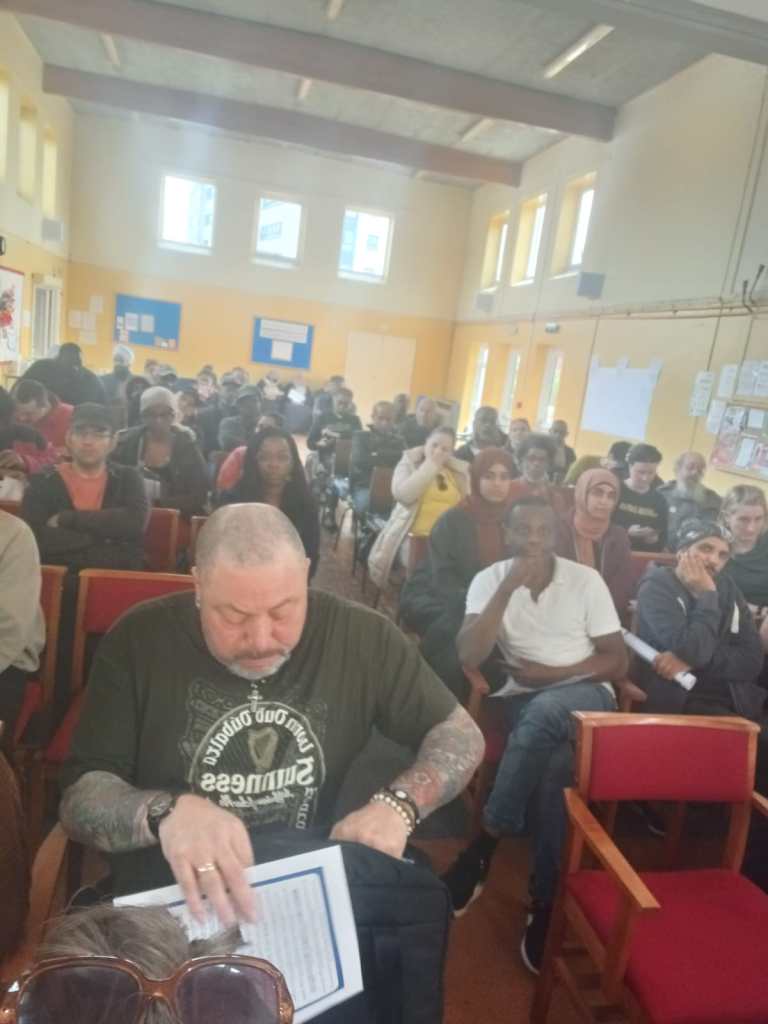
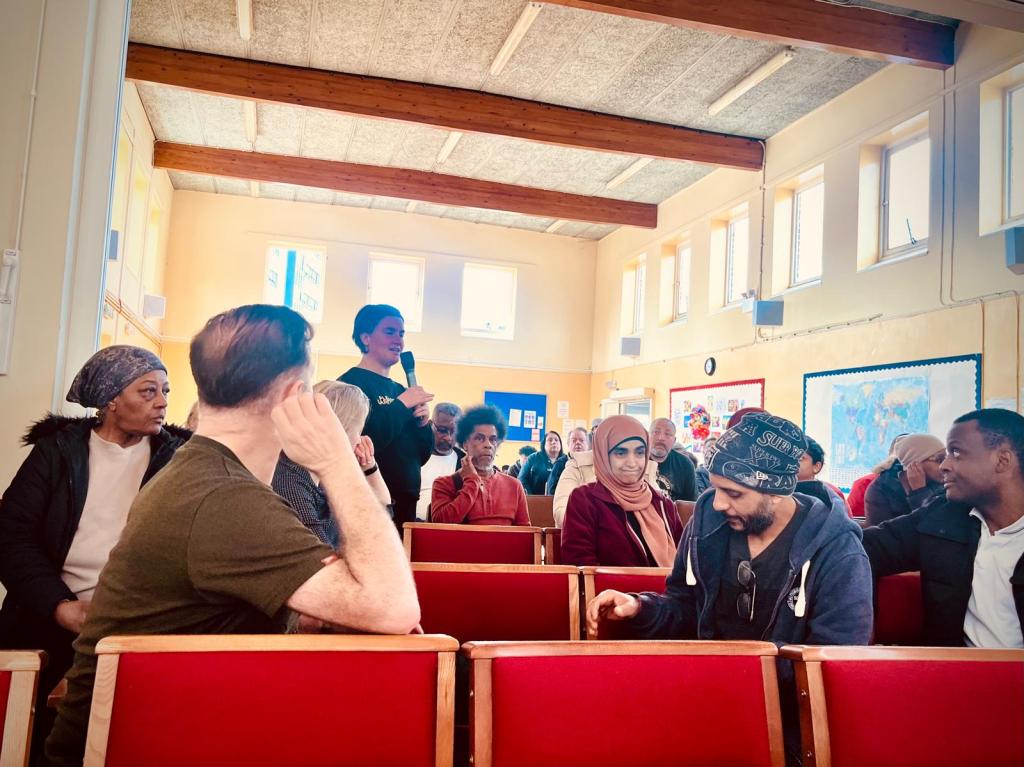
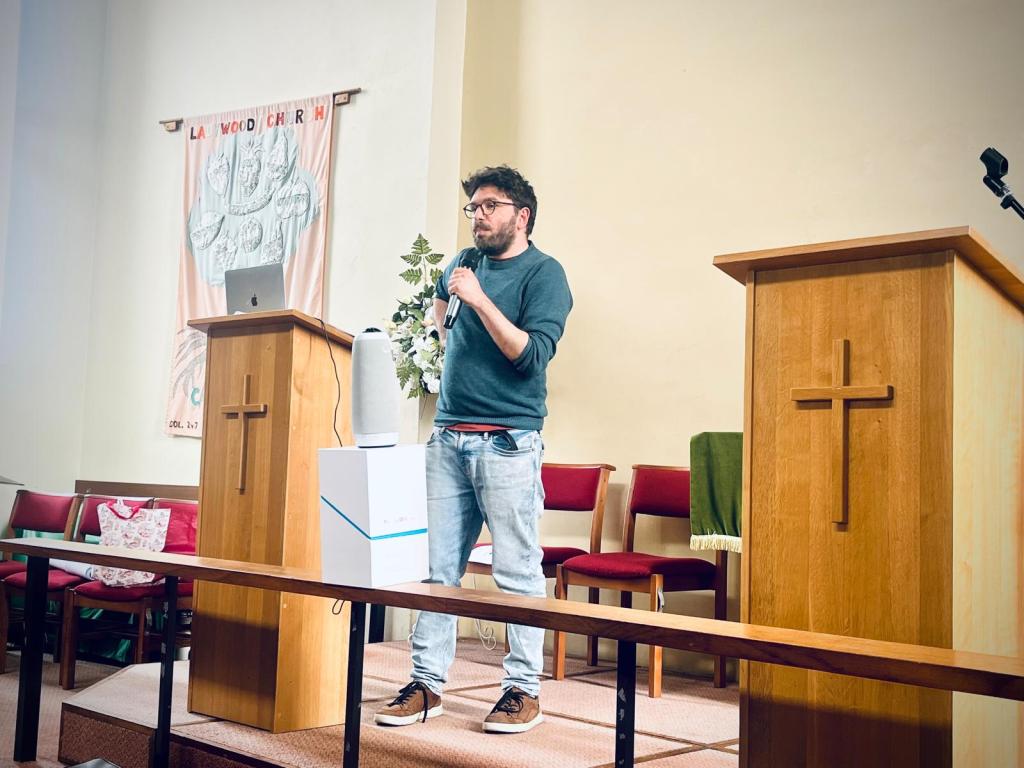
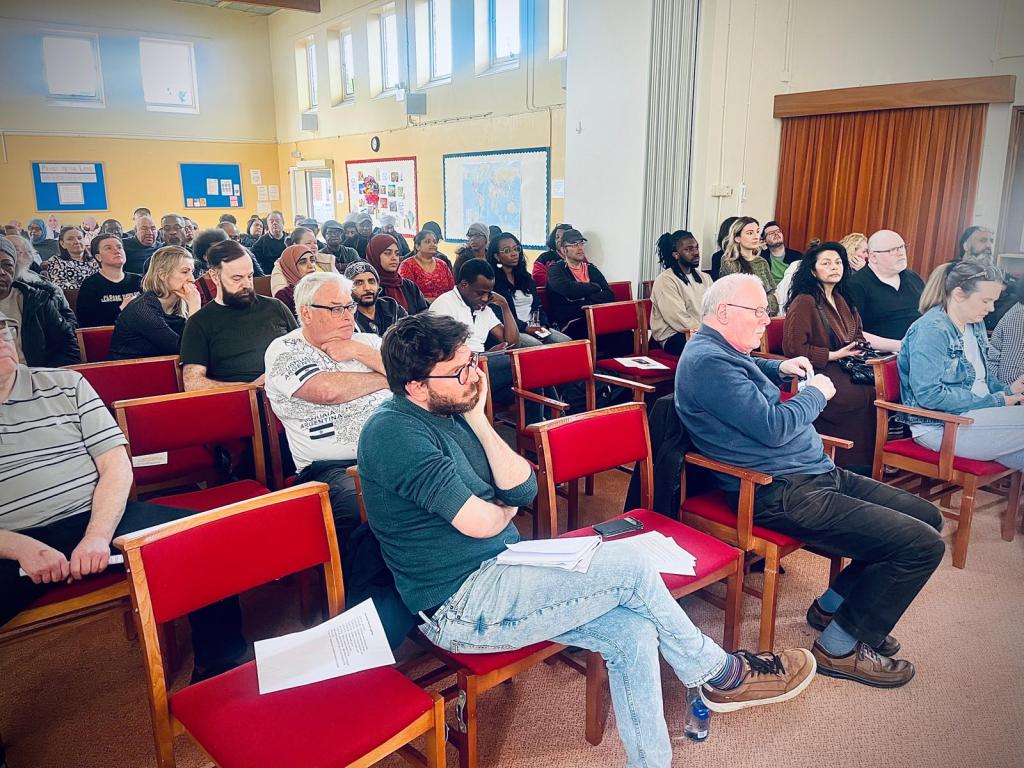
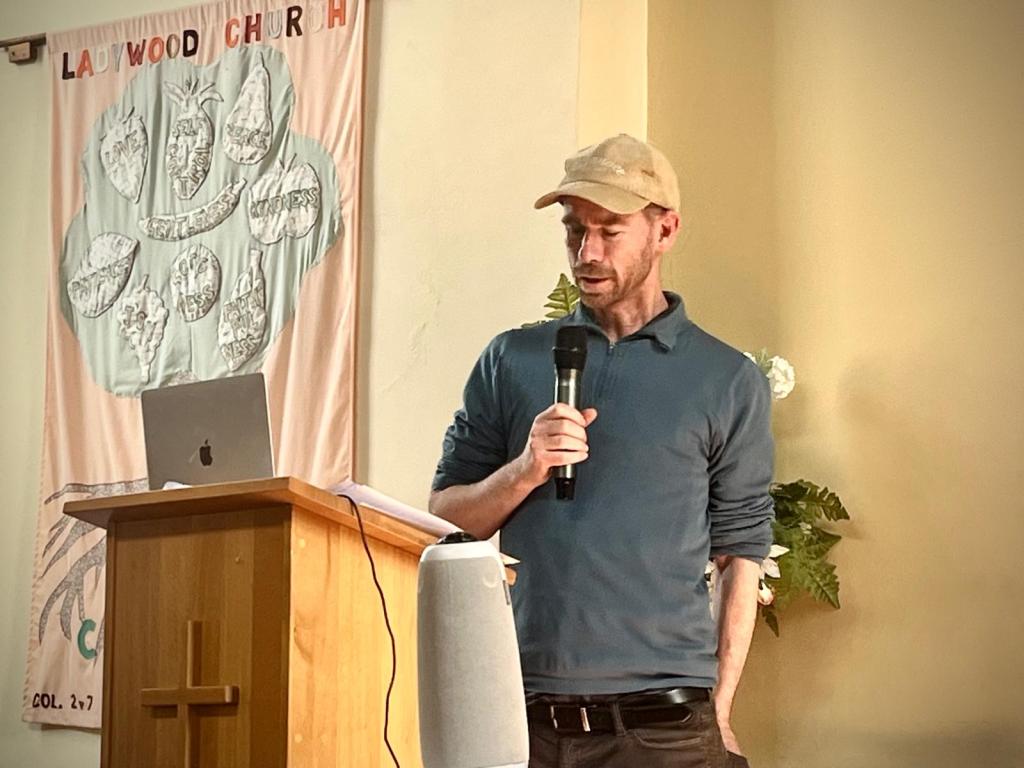
Thank you to everyone who came to the public residents update meeting today. There were around 30 people online and 70 people in the church. Watch the meeting recording.
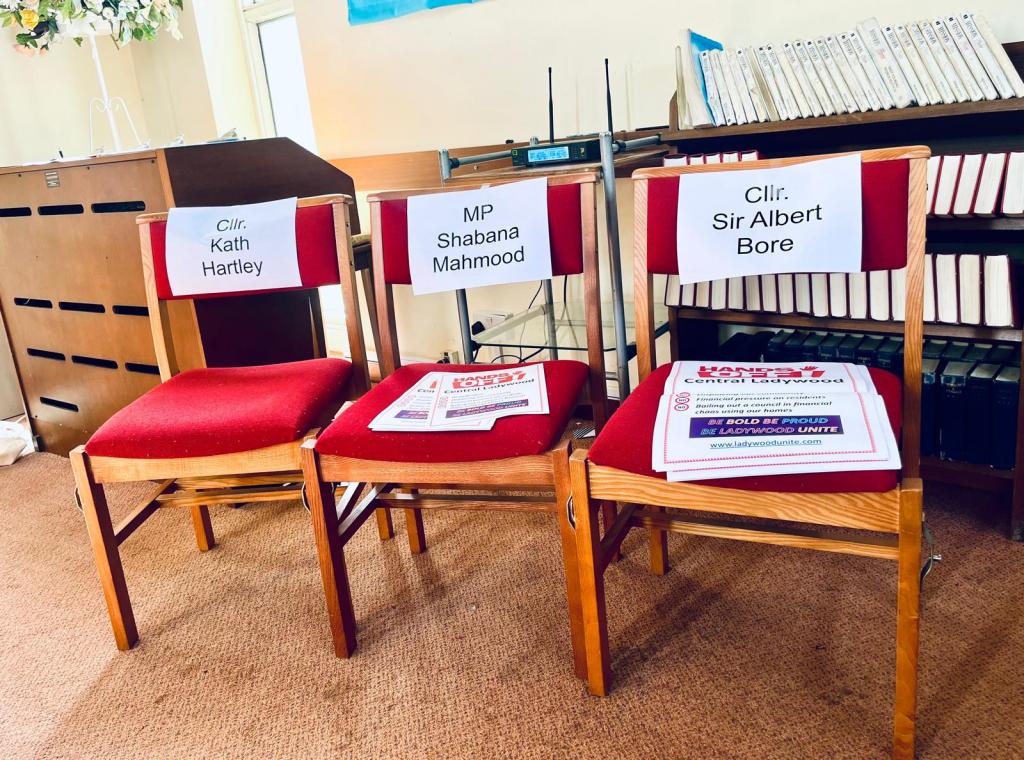
Our local representatives did not respond to our invitations to speak with us. We gave them one month of notice and followed up, too. It was unsurprising they are missing because they have not been helping us to protect our community from being demolished.
Please sign up for door knocking, or share your experience in a blog on this website, by emailing ladywoodunite@gmail.com.
Donate to our legal fund here: https://www.crowdjustice.com/case/ladywood-regeneration-judicial/
A written version of Marco Di Nunzio’s talk is available below for the people online who requested it.
Thank you to Adelaide Di Nunzio for the beautiful photographs below, to all the speakers: Jayne (Druids Heath), Layla, Marco (Ladywood Research Group), Andy and Robert (churches), Lee, Laura, George, for talking. Thank you to the residents who shared their stories, including Sephena Reece, who needs legal aid in order to challenge the council who are not fulfilling their legal obligations to keep her and her children safe at home.
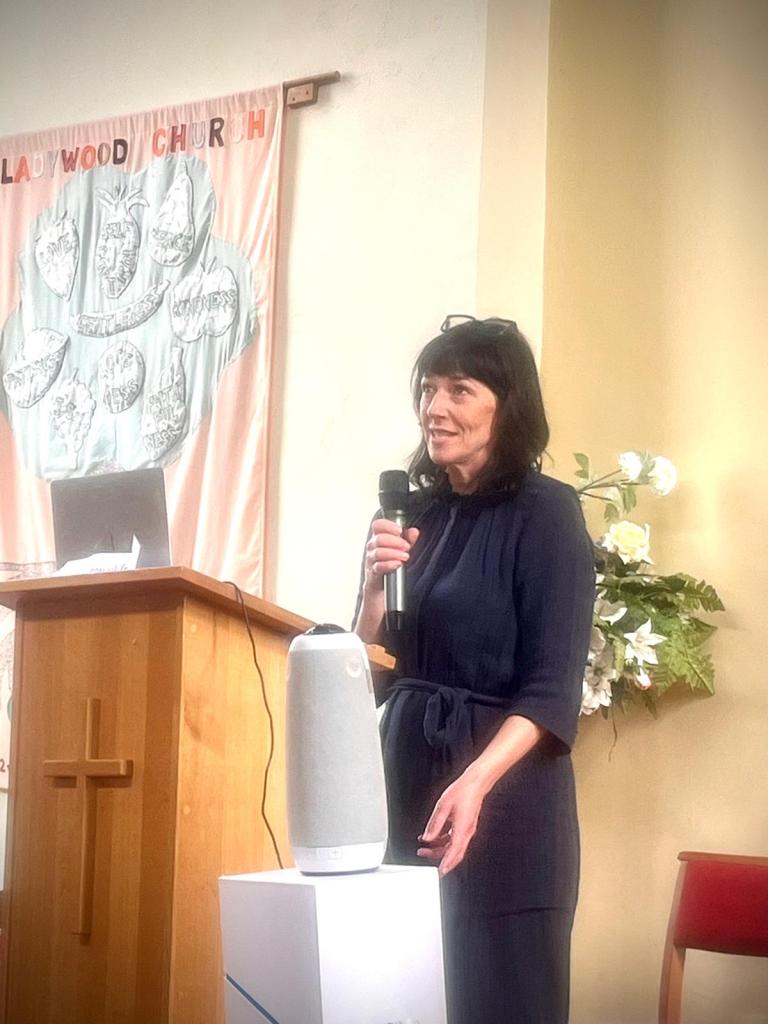
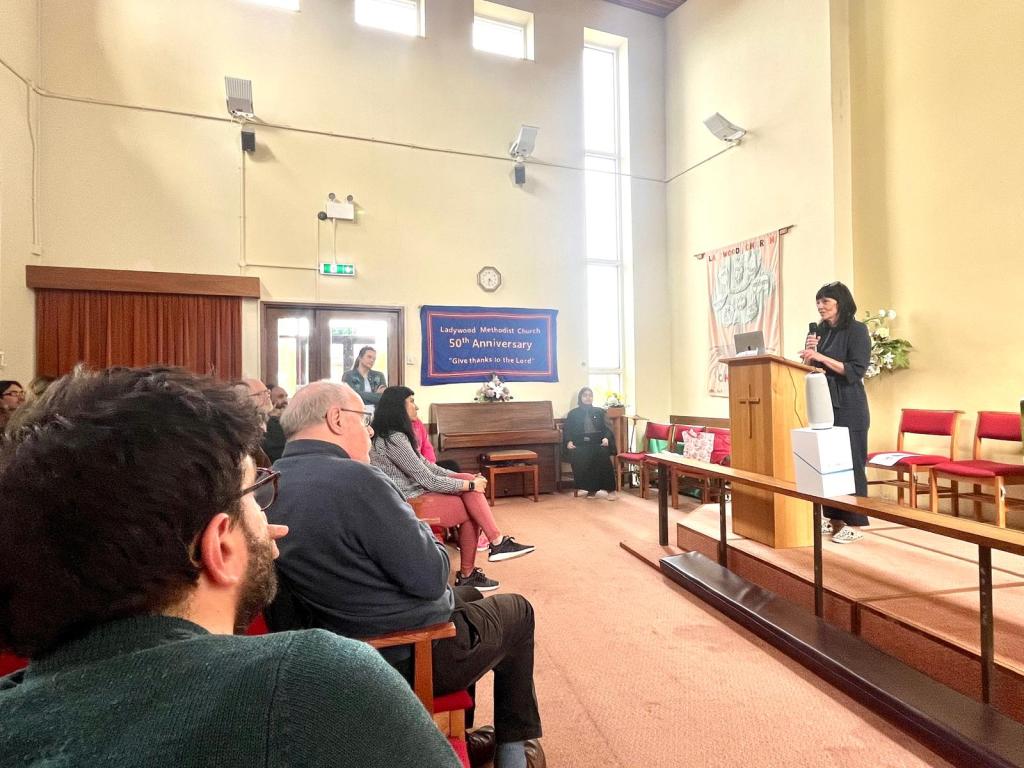

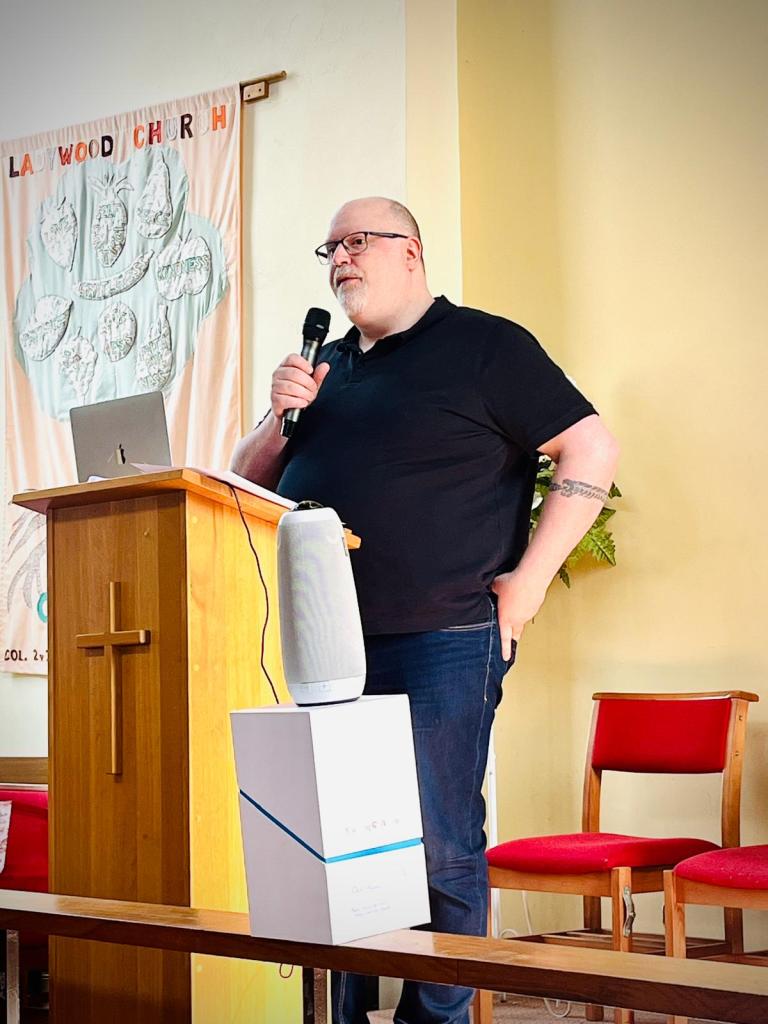
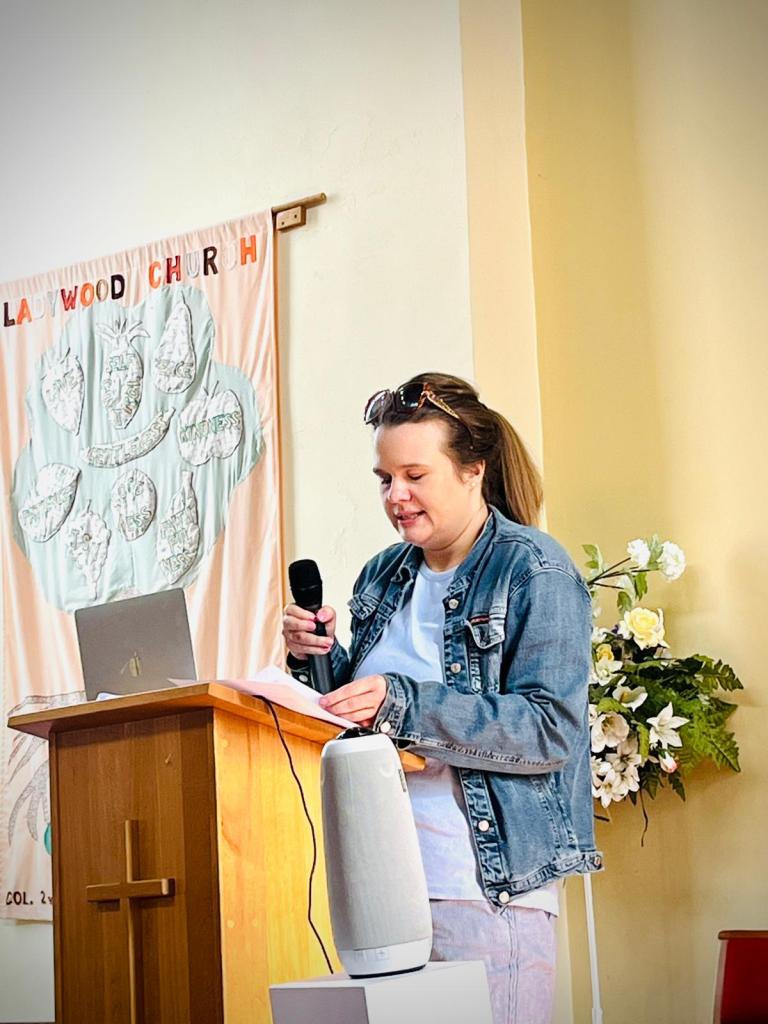
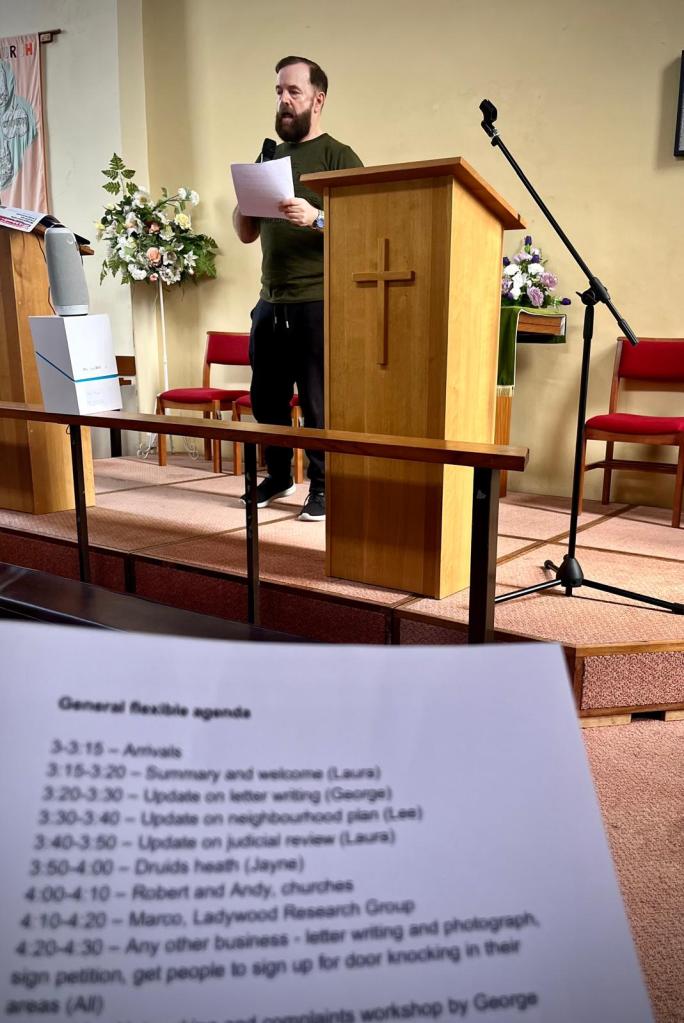
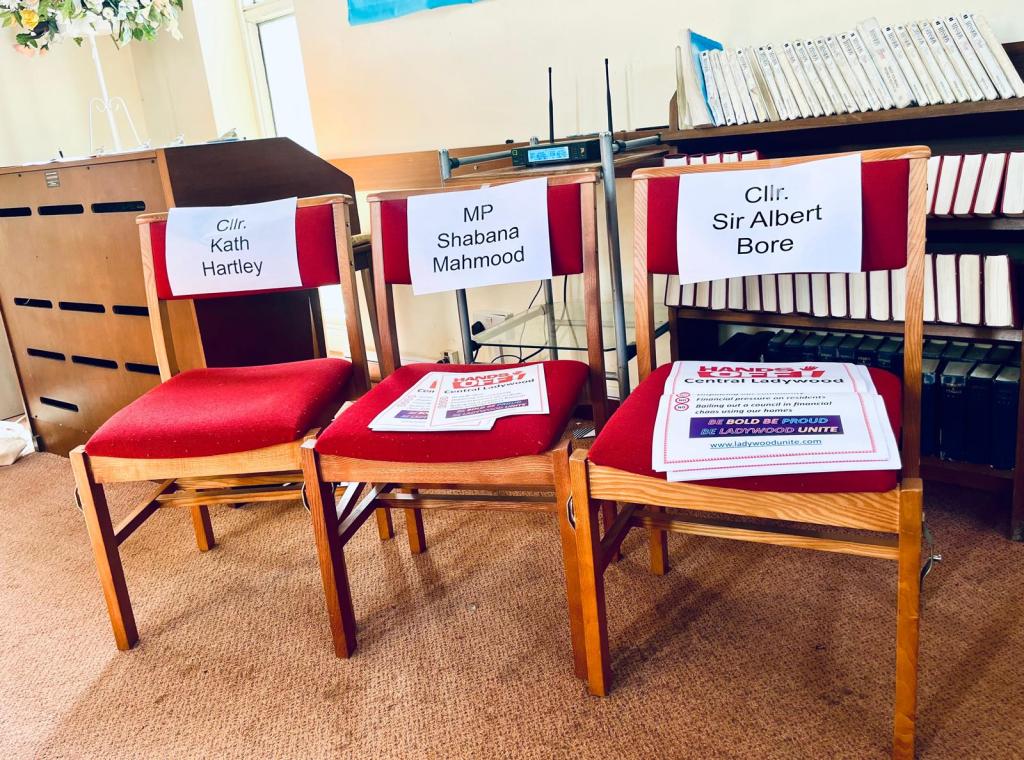
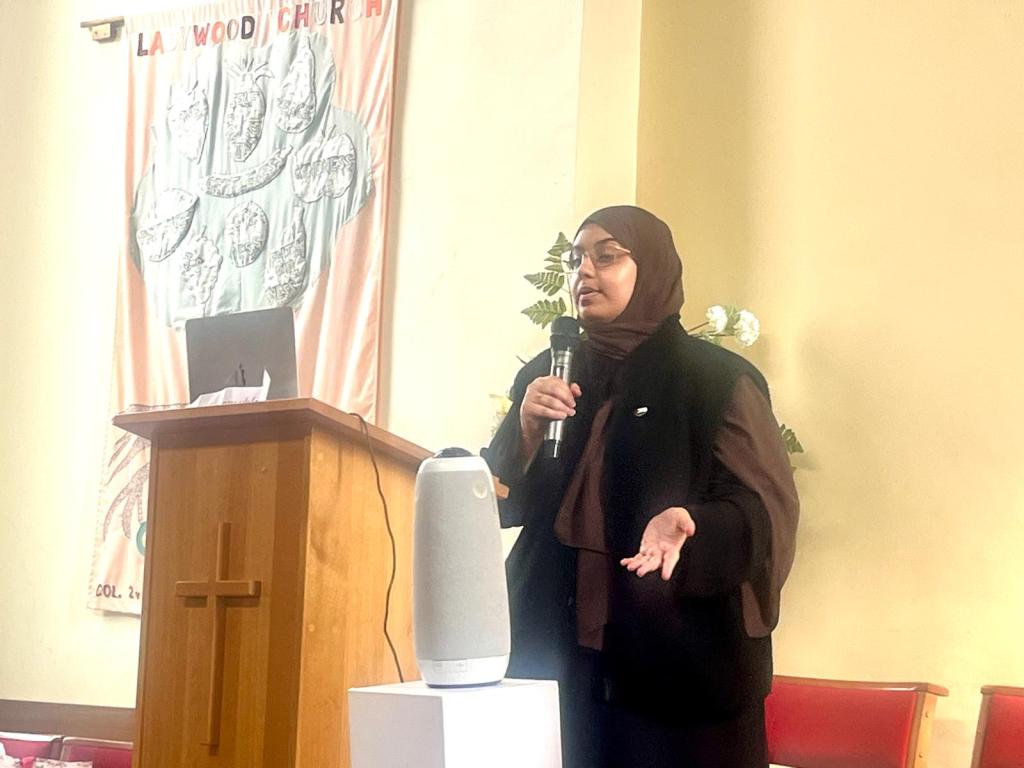
A written version of Marco Di Nunzio’s talk is available here:
“As a researcher, I have been involved in multiple campaigns against large-scale demolitions in Ethiopia, Nigeria, Italy and the Britain. My job is to use to research as a way of documenting what is happening, but also try to imagine ways cities are more just and accessible for those who live in it. Research can be neutral only when relationships of power are equal. Until then, the responsibility of research is to sustain struggles that help questioning the status quo.
The area I have been working on for decades, and lived for 2 years in Addis Ababa, has been razed to the ground. 11,000 houses were demolished just over a week.
These stories are painfully common across the world – and they are becoming more common in Birmingham.
We are witnessing a systematic attack on housing and communities across the city.
The recipe is the same: demolish what is there and hand over entire areas to developers with very no provision for social housing, very limited affordable housing and no respect with the existing fabric of the city.
Struggles for a better city, and against demotions have been waging across Birmingham, just as in many places across the world.
What we learn from the battles is that our first task is to be disruptive as possible.
Disruption is not just for disruption’s sake. Disruption can help slow down process that developers and city governments present as inevitable as well as, and more importantly, open the way for alternatives to come about..
Ladywood Unite has carried out a formidable campaign. It has effectively made the regeneration process painful for developers and BCC. It forced them to be accountable to its residents. And let us not forget, the sacking of the regeneration head in February is the result of such struggle.
Again, disruption is not for disruption’s sake. Disruption can slow down the process and open the possibility for alternatives.
What is Ladywood Unite fighting for then?
I want to share some data/insights on the process.
Let us start with some numbers
Ladywood in numbers
Ladywood is a diverse community of 5000 people
Between 40 and 60% born outside the UK
Between 25 and 34 years of age: 35%
- 35% and 40% African
- 17% Caribbean
- 10% and 20% White
1,979 existing homes which consist of:
- 1266 in the Council’s ownership
- 628 of the above in 7 tower blocks (which also includes additional private leaseholders)
- 146 owned by other Registered Providers (RP)
- 567 in third party private ownership
Substantial percentage of households in socially rented accommodation,
Areas where social rents from the council across the estate range between 41% and 86%
Homeownership – 19.8% and 13% currently paying mortgages and loans on their houses, mostly on council-owned land
What the developer is proposing
7,531 new and replacement homes to be built over 20 years, of which
- 1065 “affordable” homes (16% affordable)
- 146 re-provided home owned by existing housing associations
- 6320 houses to be put on the housing market (500-400k)
This has already happened to Ladywood
In the 1960s, 3903 dwellings were destroyed.
Even by building higher, it was only possibly to replace about 56% of the original dwellings – a surplus of over 50,000 people had to be rehoused elsewhere
Now we have a proposed destruction of 1800-1900 homes.
No social housing. Limited affordable housing provision
The construction of 6000 luxury homes – a significant increase that indeed would totally transform the spatial, but also the social fabric of the city
What it will come out, it will be mostly a homogeneous community of wealthy residents. A city that prides itself for its diversity is once again undermining that diversity in a place like Ladywood
Of course, the question is who is going to gain from the process.
One is the developer yes.
The rest is also the council. One might be land purchase. The other is that new affordable homes will be in council ownership, allowing them to reprice the homes from social (50% market price) to affordable (80% market price). The council is actively behaving like a rapacious landlord.
There are a few things I want to say about the process – for those who follow Ladywood Unite blog, might have seen my “questions to council” series of post, but let me rehearse some of the point here again
First, the use of sole bidding, a modus operandi that is not considered best practice by experts. This is further aggravated by inconsistent reporting of procurement procedures in the cabinet documents voted by the council in June 2023 and lack of transparency in the bid evaluation reporting in the cabinet documents voted by the council in June 2023
Second, the poor quality of Human Rights consideration and Equality Assessments – they are all framed in a way to reinforce the validity of the program, overplaying the supposed benefits of the regeneration and underplaying the negative socio-economic impacts.
One for all is the impact that the lack of sufficient affordable housing and no social housing provision is going to have on the actual prospects for the existing community to return in the area.
The document states that the main ethnic groups in the area are Black African (31.1%) and Black Caribbean (12.1%), well above the Birmingham averages of 5.8% and 3.9%, respectively. The analysis also recognises that “the proposals will therefore have a greater impact on the Black community in comparison to other races, but this is likely to be both positive overall”.
We fail to understand the explanation and justification for this claim of positive impact specific to Black communities. The rest of the report mentions that new community spaces, better education facilities and improved connectivity will result in an improvement in the neighbourhood. Yet, we fail to understand the specific measures that have been put into place to mitigate impact on Black communities.
Third, the regeneration has been characterised by a breakdown of democratic representation since the very beginning
The lack of involvement of residents in the pre-bidding process. Residents were not involved in the long-listing and shortlisting of potential options for the development of the Ladywood Estate (2023 Full Business Case. Appendix 2: C1) prior to commencing a bidding process. This is something that BCC should have done according to numerous legislations, including Local Government Act 1999.
This has been aggravated by the inaccurate information by councillors and MP in 2019 about the project been participative and then the lack of engagement with the community from political representatives throughout
The poor quality of participation in the Engagement Workshops conducted in October/November 2023, including severely limiting access to these workshops.
The poor quality of the methodology used in the Engagement Workshops and the Survey to elicit residents’ participation in the preparation of the Community Charter
The fight is to make sure that BCC’s abide to basic principles of democratic representation and to its own policies around participation.
For meaningful participation to happen, there is a need for a greater commitment to guarantee citizen power, and that would involve, among others:
• Residents be consulted on a preliminary draft of the Community Charter, with the possibility of rerunning engagement workshops with the intent of rephrasing and reframing the draft of the charter.
• Residents to be involved in the design of future surveys
• Residents to be involved in the elaboration of the Stakeholder Engagement Strategy, the Stakeholder Mapping, and the elaboration of the Stakeholder Engagement Management Plan.
• Residents to be involved in drafting the job descriptions of the Stakeholder Manager and Officer.
• The parts concerning the design of the indicative Master Plan agreed in the Development Agreement be published
• Residents to be given representatives on the Ladywood Project Board and to allow residents to choose their representatives to sit on the Ladywood Project Board
• Residents to be given the capacity to affect the design of the Master plan for the area as well as and policies concerning the housing provision for the existing community of Ladywood”
 Ladywood Unite
Leave a comment